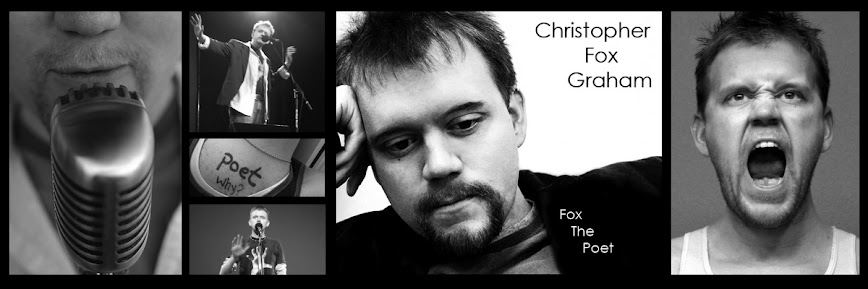
The Sedona Poetry Slam’s 18th season continues Saturday Dec. 5 with a change of scenery: the second slam of the year shifts down the hall to the Alice Gill-Sheldon Theatre starting at 7:30 p.m. Performance poets will bring high-energy competitive spoken word to the intimate room for one night only before the slam returns to its usual home in the new year.
With the holidays closing in poets are expected to bring everything from wry gift-giving satire to reflective end-of-year verse as they compete for cash prizes and bragging rights.
Open Slam
A poetry slam is like a series of high-energy three-minute one-person plays judged by the audience. Slam poetry is an art form that allows written page poets to share their work alongside theatrical performers hip-hop artists and lyricists.
Poets come from as far away as Phoenix Tucson Prescott and Flagstaff competing against local poets from Sedona and Cottonwood college poets from Northern Arizona University and youth poets from Verde Valley high schools. All types of poetry are welcome on the stage from street-wise hip-hop and narrative performance poems to political rants and introspective confessionals. Any poem is a “slam” poem if performed in a competition. All poets get three minutes per round to entertain and inspire the audience with their creativity.
Anyone can sign up to compete in the slam for the $75 grand prize and $25 second-place prize. To compete in the slam poets will need three original poems each lasting no longer than three minutes. No props costumes nor musical accompaniment are permitted. The poets are judged Olympics-style by five members of the audience selected at random at the beginning of the slam.
Email host Christopher Fox Graham at foxthepoet@yahoo.com to sign up early to compete or by the Friday before the slam or sign up at the door the day of the slam. Poets who want to compete should purchase a ticket in case the roster is filled before they arrive.
Tickets and Venue
The Alice Gill-Sheldon Theatre is located at 2030 W. SR 89A in West Sedona in the same complex as the Mary D. Fisher Theatre. Tickets are $12 in advance or $15 at the door. For tickets call 928-282-1177 or visit SedonaFilmFestival.org.
Upcoming Slams
The next poetry slams will be held on Saturdays, Feb. 13, March 6, April 17 and May 22 at the Mary D. Fisher Theatre.
The prize money is funded in part by a donation from Verde Valley poetry supporters Jeanne and Jim Freeland.
For more information visit sedonafilmfestival.com or foxthepoet.blogspot.com. For a full list of slam poetry events in Arizona visit azpoet.com or the Arizona State Poetry Society at azpoetry.net..
What is Poetry Slam?
Founded at the Green Mill Tavern in Chicago in 1984 by Marc Smith poetry slam is a competitive artistic sport designed to get people who would otherwise never go to a poetry reading excited about the art form when it becomes a high-energy competition. Poetry slams are judged by five randomly chosen members of the audience who assign numerical value to individual poets’ contents and performances.
Poetry slam has become an international artistic sport with more than 100 major poetry slams in the United States Canada Australia and Western Europe. Slam poets have opened at the Winter Olympics performed at the White House and at the United Nations General Assembly and were featured on “Russell Simmons’ Def Poets” on HBO.
Sedona has sent four-poet teams to represent the city at the National Poetry Slam in Charlotte N.C. Boston Cambridge Mass. Oakland Calif. Decatur Ga. Denver and Chicago.
The Sedona Poetry Slam opens its 18th season on Saturday, Oct. 10, with a twist: The first slam of the year takes the stage on the set of “The Dead Quilters Society,” the play being staged at the Mary D. Fisher Theatre that weekend and the next. Performance poets will bring high-energy, competitive spoken word to the theater starting at 7:30 p.m.
Poets will compete for cash prizes on a set built for the popular Sedona historical play — a collision of page, stage and improvised scenery that regulars say only adds to the show.
Open Slam
A poetry slam is like a series of high-energy three-minute one-person plays judged by the audience. Slam poetry is an art form that allows written page poets to share their work alongside theatrical performers hip-hop artists and lyricists.
Poets come from as far away as Phoenix Tucson Prescott and Flagstaff competing against local poets from Sedona and Cottonwood college poets from Northern Arizona University and youth poets from Verde Valley high schools. All types of poetry are welcome on the stage from street-wise hip-hop and narrative performance poems to political rants and introspective confessionals. Any poem is a “slam” poem if performed in a competition. All poets get three minutes per round to entertain and inspire the audience with their creativity.
Anyone can sign up to compete in the slam for the $75 grand prize and $25 second-place prize. To compete in the slam poets will need three original poems each lasting no longer than three minutes. No props costumes nor musical accompaniment are permitted — except, for this one night, the play’s own quilting-themed backdrop, which stays put. The poets are judged Olympics-style by five members of the audience selected at random at the beginning of the slam.
Email host Christopher Fox Graham at foxthepoet@yahoo.com to sign up early to compete or by the Friday before the slam or sign up at the door the day of the slam. Poets who want to compete should purchase a ticket in case the roster is filled before they arrive.
Tickets and Venue
The Mary D. Fisher Theatre is located at 2030 W. SR 89A Suite A-3 in West Sedona. Tickets are $12 in advance or $15 at the door. For tickets call 928-282-1177 or visit SedonaFilmFestival.org.
Upcoming Slams
The next poetry slams will be held on Saturdays, Dec. 5 at the Alice Gill-Sheldon Theatre, and Feb. 13, March 6, April 17 and May 22 at the Mary D. Fisher Theatre.
The prize money is funded in part by a donation from Verde Valley poetry supporters Jeanne and Jim Freeland.
For more information visit sedonafilmfestival.com or foxthepoet.blogspot.com. For a full list of slam poetry events in Arizona visit azpoet.com or the Arizona State Poetry Society at azpoetry.net..
What is Poetry Slam?
Founded at the Green Mill Tavern in Chicago in 1984 by Marc Smith poetry slam is a competitive artistic sport designed to get people who would otherwise never go to a poetry reading excited about the art form when it becomes a high-energy competition. Poetry slams are judged by five randomly chosen members of the audience who assign numerical value to individual poets’ contents and performances.
Poetry slam has become an international artistic sport with more than 100 major poetry slams in the United States Canada Australia and Western Europe. Slam poets have opened at the Winter Olympics performed at the White House and at the United Nations General Assembly and were featured on “Russell Simmons’ Def Poets” on HBO.
Sedona has sent four-poet teams to represent the city at the National Poetry Slam in Charlotte N.C. Boston Cambridge Mass. Oakland Calif. Decatur Ga. Denver and Chicago.
For the 200 people who jumped or fell to the deaths from the World Trade Center on Sept. 11, 2001.
On a commonplace Tuesday morning, not unlike that Sunday morning 60 years before, destined for infamy they held hands as they fell
It was a working Tuesday a date on the calendar a morning like the morning before but now they found themselves standing on the window sill of the 92nd floor overlooking the city and they felt weightless
They were not thinking about the cause-and-effect history of textbooks and CNN sound bytes they weren’t debating the geopolitical ramifications leading up to that morning he had decaf she had a bearclaw and an espresso and they talked about Will & Grace
jets impregnated buildings with infernos and now the fire was burning and the smoke was rising and it was getting hard to breathe even after they smashed the window out the inferno was swelling it had reached their floor their stairwells were gone and the options now were to burn or to fall
when the human animal realizes death is inevitable
psychologists say we want control
over those final moments
choosing suicide over surrender is a healthy reaction
because we choose to accept annihilation
rather than letting it choose us
So on one side
is unbearable heat
roaring flames
acrid smoke
and screams of the suffering
On the other side
fresh air
suicide is the final act of free will that keeps the consciousness intact even as it is destroyed
but they were not thinking about psychology
they were not thinking about terrorism
the debate about responsibility,
retalaiation,
wars, flags, and Patriot Acts
can wait until September 12th
this morning belongs to them because they did not have a tomorrow the true terror of that morning is to know what they were thinking as they decided then whether to burn or to fall now, imagine having that conversation with the stranger sitting next to you:
Sedona Poetry Slam on Saturday, May 9, to select two representatives for BlackBerry Peach state tournament
The penultimate installment of the season arrives Saturday, May 9. Performance poets will bring high-energy, competitive spoken word to Sedona's Mary D. Fisher Theatre starting at 7:30 p.m.
Poets from around Arizona will compete in three rounds of original work, with two winners earning berths at the BlackBerry Peach Poetry Slam's Arizona Championship, to be held at the Rebel Lounge in Phoenix on Wednesday, June 10.
Poet Josh Wiss, photo by David Jolkovski/Larson Newspapers
Open Slam
A poetry slam is like a series of high-energy, three-minute one-person plays, judged by the audience. Slam poetry is an art form that allows written page poets to share their work alongside theatrical performers, hip-hop artists and lyricists.
Poet Layla Tenney, photo by David Jolkovski/Larson Newspapers
Poets come from as far away as Phoenix, Tucson, Prescott and Flagstaff, competing against local poets from Sedona and Cottonwood, college poets from Northern Arizona University and youth poets from Verde Valley high schools. All types of poetry are welcome on the stage, from street-wise hip-hop and narrative performance poems, to political rants and introspective confessionals. Any poem is a "slam" poem if performed in a competition. All poets get three minutes per round to entertain and inspire the audience with their creativity.
Poet Valence, photo by David Jolkovski/Larson Newspapers
Anyone can sign up to compete in the slam for the $75 grand prize and $25 second-place prize. To compete in the slam, poets will need three original poems, each lasting no longer than three minutes. No props, costumes nor musical accompaniment are permitted. The poets are judged Olympics-style by five members of the audience selected at random at the beginning of the slam.
Email foxthepoet@yahoo.com to sign up early to compete or by the Friday before the slam, or sign up at the door the day of the slam.
Host Christopher Fox Graham, photo by David Jolkovski/Larson Newspapers
Tickets and Venue
The Mary D. Fisher Theatre is located at 2030 W. SR 89A, Suite A-3, in West Sedona. Tickets are $12 in advance or $15 at the door. For tickets, call 928-282-1177 or visit SedonaFilmFestival.org.
The last Sedona Poetry Slam of Saturday, June 6. The prize money is funded in part by a donation from Verde Valley poetry supporters Jeanne and Jim Freeland.
Poet Paul Jones Jr., photo by David Jolkovski/Larson Newspapers
Email foxthepoet@yahoo.com to sign up early to compete or by the Friday before the slam or at the door the day of the slam. For more information, visit sedonafilmfestival.com or foxthepoet.blogspot.com.
Sedona Youth Poet Laureate Anya Blue Lior, photo by David Jolkovski/Larson Newspapers
BlackBerry Peach
The top two poets will earn Sedona's spots at the BlackBerry Peach National Poetry Slam's Arizona State Championships, sponsored by the Arizona State Poetry Society.
Sedona's poets will compete against poetry from Flagstaff's FlagSlam, Prescott Poetry Slam, the PHX Poetry Slam and Body Slam in Phoenix, Margot Berlin's Poetry Open Mic in Mesa and Tucson Slam Poetry will compete at the 14-poet slam held by Ghost Poetry Slam at the Rebel Lounge.
The overall state champion will win trip sponsored by the ASPS to represent Arizona at the National Federation of State Poetry Societies' BlackBerry Peach National Slam from July 23 to 26 in Overland Park, Kansas. ASPS will cover flight, hotel, registration as well as a lunch/dinner package.
Poet Tempest Black, photo by David Jolkovski/Larson Newspapers
Poetry Slam
Founded at the Green Mill Tavern in Chicago in 1984 by Marc Smith, poetry slam is a competitive artistic sport designed to get people who would otherwise never go to a poetry reading excited about the art form when it becomes a high-energy competition. Poetry slams are judged by five randomly chosen members of the audience who assign numerical value to individual poets' contents and performances.
Sedona Poet Laureate Gary Every, photo by David Jolkovski/Larson Newspapers
Poetry slam has become an international artistic sport, with more than 100 major poetry slams in the United States, Canada, Australia and Western Europe. Slam poets have opened at the Winter Olympics, performed at the White House and at the United Nations General Assembly and were featured on "Russell Simmons' Def Poets" on HBO.
Sedona has sent four-poet teams to represent the city at the National Poetry Slam in Charlotte, N.C., Boston, Cambridge, Mass., Oakland, Calif., Decatur, Ga., Denver and Chicago.
She knows where the moon is in the sky when I do not,
and I have been walking on this earth
compass in hand,
for 40 times her life
I rarely get lost
yet, she seems to know
where her old friend is
every time we see him
She says hi to the stars
reaches up like she can touch them
I want to explain to her
the distance
of light years
How the balls of fire we see in the sky
are millions of years older than us
And even in our fastest ship
We will never reach them in our lifetime
I want to explain these things her
but she's not old enough to understand the words
And I wonder
if she's right
Because, truthfully,
I do not know the length of a light year
I have read it in books
been told by wiser men and women than me
And I believe them
because that is what we must do
to survive this world:
believe those who study these things
so we can go about our day
living
So I wonder if she's right
If I reach out my hand and say “hi, star”
with the same enthusiasm that she does
Will I hear them speak back?
When they reach through the night sky
when no one else is looking
shake hands with me,
Touch my fingers to theirs?
Say,
“It has been some time since we've spoken.
How are you?
We are doing fine
up here in the night
watching you down there
learning to learn
learning how things grow
feeling how things feel
what gravity is
what knees are
I wonder
if she their ambassador to us
or just another traveler
right now, it doesn't matter
because she's waving hello to the moon again
and I can't prove it
but I swear I saw him wave back
I posted this poem on Thursday, Feb. 13, 2020, and made this video in March 2020, but apparently forgot to post it, so it's been in my "drafts" for six years.
The Sedona Poetry Slam returns to the Mary D. Fisher Theatre in West Sedona for a poetry slam on Saturday, April 4. Admission is free to all, thanks to the sponsorship of the Northern Arizona Book Festival, a 501(c)(3) nonprofit that holds the annual festival the weekend of April 12, 13 and 14, in Flagstaff.
April is also National Poetry Month, so the best way to support poetry is seeing a showcase of the best poets in Northern Arizona. Many of the competing poets from the Sedona Poetry Slam will be showcasing their work, along with Flagstaff Poetry Slam, which are both festival partners.
Open Slam
A poetry slam is like a series of high-energy, three-minute one-person plays, judged by the audience. Slam poetry is an art form that allows written page poets to share their work alongside theatrical performers, hip-hop artists and lyricists.
Poets come from as far away as Phoenix, Tucson, Prescott and Flagstaff, competing against local poets from Sedona and Cottonwood, college poets from Northern Arizona University and youth poets from Verde Valley high schools. All types of poetry are welcome on the stage, from street-wise hip-hop and narrative performance poems, to political rants and introspective confessionals. Any poem is a "slam" poem if performed in a competition. All poets get three minutes per round to entertain and inspire the audience with their creativity.
Anyone can sign up to compete in the slam for the $75 grand prize and $25 second-place prize, paid. To compete in the slam, poets will need three original poems, each lasting no longer than three minutes. No props, costumes nor musical accompaniment are permitted. The poets are judged Olympics-style by five members of the audience selected at random at the beginning of the slam.
Email foxthepoet@yahoo.com to sign up early to compete or by the Friday before the slam, or sign up at the door the day of the slam.
Tickets and Venue
The Mary D. Fisher Theatre is located at 2030 W. SR 89A, Suite A-3, in West Sedona. Tickets are free. Call 928-282-1177 or visit SedonaFilmFestival.org for more information.
Upcoming Slams
The final two poetry slams of the season will be held on May 9 and June 6.
The prize money is funded in part by a donation from Verde Valley poetry supporters Jeanne and Jim Freeland.
For more information, visit sedonafilmfestival.com or foxthepoet.blogspot.com. For a full list of slam poetry events in Arizona, visit azpoet.com.
What is Poetry Slam?
Founded at the Green Mill Tavern in Chicago in 1984 by Marc Smith, poetry slam is a competitive artistic sport designed to get people who would otherwise never go to a poetry reading excited about the art form when it becomes a high-energy competition. Poetry slams are judged by five randomly chosen members of the audience who assign numerical value to individual poets' contents and performances.
Poetry slam has become an international artistic sport, with more than 100 major poetry slams in the United States, Canada, Australia and Western Europe. Slam poets have opened at the Winter Olympics, performed at the White House and at the United Nations General Assembly and were featured on "Russell Simmons' Def Poets" on HBO.
we bring magic to this microphone each one of us, a story to tell some for the wordplay some with tongue brushes to landscape the canvas of your skull
these words are art deprived of musical instrument chiseled away from marble cut out of canvas a moment in a breath in time
you can put spoken word to paper, but it doesn't live there it lives in the space between my lips and your ears between the words on the page and how you hear them in your mind
“fuck linear time,”
but read a poem backwards and derive meaning from it
with answers more immediate you can exercise your demons overcome your trauma forgive your sins
your hate
your pain
this stage brings healing if you want it and many walk away recovered but some of us are addicted to others’ stories to your story so, we live in theirs every poet on this mic
I don't want to heal don't let this hurt softened the damage undone
I come to feel to relive those moments, even the worst ones,
especially the worst ones:
the absent father who taught me how not to be a man the lost lovers who left because of what I said
“They Held Hands” my 9/11 poem is not about the politics but that moment in Flagstaff
when i sat at a bar and watched people like me leap from the windows
from the 92nd floor
they will never hear this poem no matter how many times I perform it
they will never stop their fall never gain wings never touch the earth gently they fall
I can't bring them back hear a new poem they would have written with another year, another month, another day to write it.
I don't say their names to heal, but to live the loss
again
and again
and again
it’s how I keep them alive
no poem can undo their sins or mine no matter how furiously I scribble, or what scores you give me
that's not how this works
“fuck linear time”
but we can't go back and unsay, undo,
un-live these things
Some poets write for therapy to forgive to heal to be unbroken
I don't
I need this to burn
I need this pain
it's what made me it's why I'm here now not across town drinking whiskey or wine blissfully healed and happy
I'm here to go back to those places to relive those moments to be back in that skin that moment
that hurts
that cuts fresh down to the bone
bleeds out in syllable and simile
I'm more scar tissue than skin now
a bag of broken bones
mended by metaphors
duct tape
and poet spit
if you can make this, [points to head] feel that [points to heart] with this [lips]
that’s poetry
all the rest of this is pageantry and window dressing, pretty packaging we discard for what's inside that's why I do this why slam is a drug I can’t quit
if someone could cure this
cleave slam and poetry from memory I would refuse it
so I want to ache on your words, poets, wordsmiths, heartbreakers and life-livers I want to be deep in those moments with you
live like you were you, then
feel what you felt, then
inside you is a hurricane spinning around your best and worst moments, waiting for the proper breath to exhale them a tsunami of ache and longing and broken moments that made you
some of us don't want salvation
some of don’t want to heal
some of us want to burn
you, poet,
are an atom bomb with blowtorch lips light up this room and burn it down to the foundation
math explains everything the billiard balls of atoms the push and pull of stars’ gravity.
the geometry of moons and planets here are no questions in the dark we know light down to the meter constant for all observers at all times
quarks and bosons behave so regularly
they are quantum entangled across the universe even beneath event horizons of black holes where the math bends back on itself, time and space invert the math is consistent but to reach the singularity to see if we’re wrong will take an eternity and we don't have the time
the tick tock of time is binary future now future now always forward, never in reverse one directional in a three-dimensional space
we are math in Base 4 adenine, thymine, guanine and cytosine dance in infinite chains in every cell from archaeon to sequoia bacterium to blue whale eukaryote to you
all your decisions are T-A-C-G reacting G-T-A-C conversing in symphonic exaltations C-G-A-T firing synapses of memory and thought a trillion conversations in a cell a trillion cells in a body C-G-A-T-G-T-A-C-G … to infinity
the equations are complex the mathematics monumental but the outcome is predictable if you know the math
before poetry, I wanted to be an astrophysicist to study the grand scale of math in the cosmos calculate if the stars were where we mapped them bending to the calculations in our dissertations
I wanted the heavens because the math down here on earth
is so simple: given the initial variables, the conclusion was known history is a repeat in new uniforms adults equations to anticipate and counter leaders pushing and pulling people in predictable patterns every government, a grown child fighting over toys offended by meanies and bullies lashing out when offended
and every love affair was science first hello, first kiss, first night after enough bedpost notches why bother investing in the story when you know the last chapter? when the mathematics were clear knowing how the relationship would end
science is repeating the same experiment and getting the same results
but I didn’t account for magic because I didn’t know it before her
she knows music
the progression of chords over space and time the arrangement of instruments when to play hard tones and softness but confined to these bodies even innovation has its limitations
she learned the mathematics could play Chopin and Schubert from memory stretch her tiny hands across Rachmaninoff’s eleven keys admiring the passion and the complexity with which he composed she made music into magic
we collided on the sidewalk halfway between newsroom and crystal shop where I dissected the world for easier consumption and she channeled the universe me, planning every footfall to seem non-chalant she, an allegro improvisation a manic-pixie dream girl who shattered that archetype every chance she had
she conjures magics her movements she can play me like a concerto dancing her fingers across my skin beneath the anodyne arithmetic
there's no formula to counter her no constant to calculate no equation to balance the scales mathematic or melodic eight years on, I’m still out of my league playing boxed-in chess all the options predicted and calculated trying to anticipate her next move while she’s swirling in aerial silks above the board adding new pieces or spinning the table variables changing as her hair color
henna red and electric blue she leaves me spinning in a coda repeating the same moment until she comes in on cue to her own bear
we co-authored three Haikus Contrarian, Capricious and Chaos, half magic and math a quotient of imaginary and irrational numbers a jazz trio with a damage deposit impossible to anticipate every bit their mother and somehow part of me
and she somehow still loves this computation
still trying to solve her quadratics find her prime number solution but she has more moves than chess which not even all the atoms in the universe can count but I try because math should explain everything
“silly mister” she says and kisses me again the only answer I can find
Close your eyes and imagine your death not midnight or silence but a ceasing
no afterlife or echo
nothing beyond your last moment
eternal dark is too terrifying to accept so we imagine something beyond the Fields of Auru,
the Elysian Plain,
the halls of Valhalla
a heavenly kingdom
so like this place that they could not possibly be real
we impose order on the chaos sanity on an unforgiving world suspended in a sunbeam in the distant arm of galaxy of 400 billion silent stars utterly indifferent to our noise
with no one to listen, we manufactured our own someone who understands as we would understand
our first fiction was filmmaking projecting humanity into the heavens
if horses have gods, they look like horses
our gods are upright apes
our ancestors, who art in history, hallowed be your names; Mitochondrial Eve and Y-chromosomal Adam deliver us from the evil we visit on each other pass down wisdom through time how to hunt, to forage, to build, to bear children and bury our dead remembering those before in hopes we too would not be forgotten
we deified a tribal protector, the embodiment of our people then then city-state namesake the hero of myth immense and immortal but doomed to our same follies
finally the protagonists of books passing down the rules and morals so this loose civilization
doesn’t fall apart:
don’t covet your brother
don’t eat the bad shellfish
don’t murder your neighbor
don’t rebel against the king
if poor, don’t steal
if rich, don’t be greedy
if enslaved, don’t rebel
don't upset the status quo
don't fight the system
don't rebel,
don't rebel
or else the universe will kill you
before it kills you
anyway
say these things,
do these things
at the appointed time
to mark you "loyal" to the order
darwinian evolution on a grand scale to keep stability so we don’t extinct ourselves
individually, though, we are islands so we build monuments craft art and tell stories of what it means to be us and what it means to be me and not you so you might understand me remember me when I am gone and maybe, become a better you
12,000 generations lived and died to bring you and us to this moment here, now a billion decisions made by a million dead grandparents who bred and survive to set this stage every choice you made from first heart thump in your mother to opening that door manufactured this moment brought you here tonight
13 billion years sacrificed themselves to time for these 180 seconds
but time is short language inefficient so we stretch and pull words into the best order to best paint wisdom worth remembering
a million different tongues wiped out before cities, parchment or ink could preserve them we only speak a thousand but not one ever lacked poetry
we condense wisdom into breath articulation into art make it dance like a tornado across your skin tango passion into your subconscious salsa syncopated staccato stanzas into your spine hip-hop breaking beats into bones
the universe was born without purpose blind to every life it snuffed out since the Earth made this orbit our home
but we will make these three minutes
the reason the Big Bang
banged into existence
our stories, our sins and salvations
isn’t wordplay
this isn't supposed to pretty or safe or kind
this is raw humanity unfiltered, uncut
poured into shot glasses of time
this is divinity manifest
this is something sacred
this stage is Holy Ground
when a poet speaks on this mic,
death has no dominion
there is no god but mankind,
and you are its prophet,
peace be upon you
but “prophet” is just “poet” with too many letters so poets, edit your work our ancestors deserve the effort
when a good poem lands let it wash over you let the words settle in your psyche let electricity tingle your backbone what you feel
is not any faraway god but connection across this space across time to all the poets who have told their stories at poetry slams, open mics, soapboxes, pulpits, altars back to caves and campfires when the human race was no bigger than this room know you’re not alone
spit your story on this mic why you are here now not your chair, but your skin
the only blasphemy here
is silence
you have a story to tell we want to know you become worth remembering
Bowerbird was beloved in Northern Arizona. Our teams were young, mainly college kids and we only made semi-finals a handful of times, but he always had kind words for our poets and our teams from Flagstaff and Sedona.
At one of my earlier National Poetry Slam Slammaster's meeting in either 2001 or 2004, there was an intense argument over a rule between Taylor Mali and the late Danny Solis and right in the middle, PSI board president Mike Henry, who was moderating the discussion called on Bowerbird, who had his hand up for the longest time.
"I just want to say I'm happy to be here with you all," Bowerbird said.
The meeting erupted in laughter and broke the tension.
Even Danny was laughing.
That will always be Bowerbird for me.
Bowerbird enjoying the National Poetry Slam's Head-to-Head Haiku in 2012.
fromThe Los Angeles Times
The Basement : Light of ‘Cultural Exiles’ Shines in Coffeehouse
By ESTHER SCHRADER
Sept. 15, 1988
Mark Phillips is singing.
Acoustic guitar slung over his shoulder, his scruffy cowboy boots tapping the beat, the janitor at the Echo Park United Methodist Church is playing songs of railroad tracks and the West to a tiny audience in the church basement.
It is Saturday night at the unassuming church on Alvarado Street north of Sunset Boulevard. And on Saturday nights, the basement becomes a makeshift coffeehouse--a dimly lit sanctuary for artists of all kinds.
Since a former choir director at the church started the free Basement Coffeehouse eight years ago, the small room with a shabby stage, creaky card tables and religious books stacked in a corner has been the scene once a week of folk music and poetry readings, New-Age paeans and subdued talk among friends....
... ‘A Lot of Characters’
“It has a lot of character--a lot of character because it has a lot of characters,” [pastor of the church Rev. David] Farley said. “We’ll have a lot of people from the Westside all chiced up; we’ll have old bag ladies sort of huddled by the piano escaping the cold with some popcorn.”
Last Saturday night, Bruce Morasch, a UCLA graduate student who calls himself “bowerbird intelligentleman,” recited his rhymes, his voice booming as he padded from one side of the stage to the other:
I’m just a restless, reckless poet from Los Angeles:
orange juice for breakfast on the Los Angeles Crest;
movie stars and boulevards,
and cars and cars and cars;
a restless, reckless poet from Los Angeles.
bdbb, bdbb, bdbd, bdbb;
bdbb, bdbb, bdbdbd.
“One day, I don’t know, poetry just started popping out of me,” he said. “And so you look around for a place to share it. Places like these.”
As Morasch gestured broadly on stage, unkempt blond hair flying and black-clad limbs flailing, a woman who calls herself “Lalaland” stretched, catlike, on a Ping-Pong table in one corner.
“See, there is a message in my rhymes if you want to hear it, but if not, it’s kind of surface,” she whispered, punctuating her phrases with soft taps on a drum she bought at Toys R Us. “It seems to some as nonsense, but to others as a code.” ...
fromThe Los Angeles Times
Poetic Places : Poetry Readings in Southland Cafes, Bookstores and Coffeehouses Serve Up a Powerful Brew of Words and Ideas
By PENELOPE MOFFET
July 11, 1987
Sunday afternoon shoppers breezed along Melrose Avenue, passing the plate-glass windows of the Gasoline Alley cafe.
The passers-by served as unwitting, temporary backdrops to poets Starr Goode and Cecilia Woloch, who read their work for those who sipped espresso and iced cappuccino inside.
Occasionally a passer-by paused to peer in, as if wondering what new trend was being set. A few times, unwitting would-be customers pushed through the front door before stopping cold and backing out. “I have to confess that I am guilty of sloth. Like many artists and writers, I like to stay up late and sleep in late,” Goode said to a wave of sympathetic laughter from the 40 people packed into the small cafe. Then she read a poem called “Sleeping Past Noon.” ...
... Held on Weekends
Most readings are held on weekends, but a few take place during the week. Monday night, for instance, Los Angeles poets Kate Braverman and Bowerbird Intelligentleman performed their work as part of the Goat Hill Readings series at the Good Earth restaurant in Santa Ana.
About 20 people sipped coffee and herbal tea and munched on salads while Intelligentleman (a UCLA social-psychology doctoral candidate and computer consultant also known as Bruce Morasch) started things off.
“I’m a REST-less, RECK-less, poet from Los Angeles,” he chanted rapidly, while a strobe light flickered over his long hair, sweat shirt and jeans. “ . . . Fruits and nuts and nuts and bolts and lots of loose screws. . . . “ In between verses, he drummed syncopation on his chest and stomach and greeted the crowd’s laughter and applause with a sweetly mischievous smile.
Throughout Intelligentleman’s mostly rhythmic, high-energy recitation, one male listener calmly sketched his woman companion, who leaned back and stared at the performing poet.Smoke spiraled upward from a few cigarettes, dissipating in the room’s air conditioning. A friend, Darlene Allen, stood beside him and translated many of his poems into sign language. (No hearing-impaired people were in the audience, but Allen and the poet say they hope to stage future readings specifically for the hearing-impaired.)
bowerbird intelligentleman is the hardest-working poet in show business.
he is one of the original performance poets, and still one of the most unique, and has -- ever since starting the art-form back in the stoned age of 1987 -- loudly proclaimed his goal of "exploding performance poetry globally".
and since then, he has worked ceaselessly and tirelessly to "make it happen".
bowerbird has always been a strong advocate of _performance_ over _print_. he rejected print as a medium suitable for his work right at the outset, and has spurned many attempts over the years to channel poems in that direction. bowerbird also pushed the envelope of the performance poetry art-form. one of the first such poets to work from memory as a matter of course -- the l.a. times called it, on 7/11/87, a "rhythmic high-energy recitation" -- he has always showed a keen awareness of the role of performance, while still writing the words one-at-a-time and crafting them carefully. performing in a visually distinctive style, he has always caught the eye of photographers, and pictures of him performing have been published far and wide, including the most well-known magazines in the world.
his sharp attention to "transforming the audio into video" also led him -- when he first started performing, in 1987 -- to a unique innovation: interpretation of the performance in a.s.l. (american sign language). mona jean cedar attended one of his early signed poetry performances, and has gone on over the subsequent 15 years to develop this hybrid, in her compelling conglomeration of dance, poetry, and sign language.
as a computer junkie, though, he was a pioneer in using desktop publishing to serve the poetry community. he published one of the first poetry calendars to inform people about upcoming events (even before there were many events). he then went on to assist in the debut of "out loud", a subsequent calendar that lasted for years. he also taught desktop publishing to g. murray thomas, who went on to publish "next..." magazine, the poetry newsletter that served as the definitive los angeles poetry calendar for the entire last decade.
bowerbird also assisted several print poetry small-press magazines. he did desktop publishing for "the moment", one of the first magazines that grew out of the open-mike movement that sprang up in the 1980s. he also created an electronic version of several issues of the magazine, long before the mass phenomenon of the world-wideweb was to emerge. he ran type out for other magazines (like "verve"), and for broadsides too.
bowerbird has also done other aspects of computer/poetry interaction. he has created computerized slide-shows to back him in performance, written multimedia authoring-tools that poets can use to create shows, and even wrote a computerized scoring program for use at slam nationals. (the program can process all the scores from all of the bouts in minutes, and create a website to show them all in a half-hour after a single click.)
bowerbird has also written a wide variety of electronic-book programs, including one that does automatic imposition of chapbooks for printing. no more will a poet need to waste a whole tree in printouts to simply get all of the pages of their chapbook to come out in the proper order. along the way, bowerbird also invented the "bowerbook", a fun means of printing and binding a book one-at-a-time that mimics perfect binding.
in addition, bowerbird has experimented with the telephone for poetry. for a time, he owned 1-800-get-poem (now defunct). he was also the original sponsor of "cut-foot" (310.cut.foot) -- active to this very day -- the music/art/poetry hotline that his friend eric brown made famous.
but alas, bowerbird is also one of the world's worst poetry producers.
one of his first productions, created first in association with the poet pedro derycz (author of the infamous "my butt itches") and then independently, was "the let's go poetry and beer party", an open-mike poetry event that doubled as a party with free beer. the parties started in his apartment, and experience a short term of success, growing into a wide range of other venues, including the electronic-cafe, the arthouse, and even a steel-art workshop. at several of these locations, video-phone connections were made to share poetry with venues like the nuyorican poets cafe in new york, the stone soup poetry collective in boston, and various other places. but even with free beer, he didn't draw a crowd large enough for him, so bowerbird eventually brought the series to a close.
he should have just quit right then and there, undoubtedly. after all, if you can't make an event work when you are giving away free beer, what hope will you ever have? but did he quit? no sir. he just plunged stupidly ahead...
another of his failures was "the 100 monkeys project", an attempt formulated in the late 1980s to gather 100 poets pooling $100 each to create two videotapes, one a 2- hour tape (with a 1-minute poem from each poet), the second a 6-hour tape (with 3- minutes from each). that project stalled out with between a half-dozen and a dozen poets... then, in 1993, he created the "one and one only" series, at barnsdall art park, using the gallery theater there, a 300-seater, a size that was unprecedented in the openmike poetry scene (and would remain so until many years later). as with the "poetry and beer" show, even though many observers on the scene considered this as one of the premiere poetry events in the city to the time, it didn't draw a large-enough crowd for his taste, so bowerbird took it down. the "voice-change-on-every-poem" format later proved its worth in the slam. along about 1993, poetry became a hit on m.t.v., with poets from the nuyorican, thereby vindicating bowerbird's longstanding prediction that this would happen. another prediction was validated when def jam took poetry and put it on h.b.o. but perhaps his most uncanny prediction was made in the late summer of 1996; after murray thomas had informed him that his dream of "100 monkeys" had manifested itself at the 1995 slam nationals, when 100+ poets participated, bowerbird predicted that this festival would garner "the top press available" by the year 2000. pushed to name what he meant by "the top press available", bowerbird responded "oh, 60 minutes." sure enough, on november 28, 1999, just 34 days before the calendar said 2000, 60 minutes aired a story on slam. people called him crazy every step of the way, but bowerbird was always right.
in 1996, in cooperation with mark schaefer -- his best friend for many years, in poetry and otherwise -- the entity known as "opposed thumb" was created, and it has proven to be the major exception to bowerbird's long road of failure.
but in spite of his clear legacy of failure, bowerbird's biggest failure was still to come, in 1998, with "nap jam" -- the north american poetry jam. intended as the "yin" counterpart to the "yang" of the national poetry slam, based on cooperation rather than competition, nap jam was conceived as a 4-night explosion of performance poetry, where every participant would get to perform in front of all of their peers, with everything videorecorded, with the whole event brought to life in "potluck" style, by its participants. sounds good, but he couldn't get enough poets to travel to las vegas for it, so after a couple years of failed jams, he finally took down that show too, after having lost tons and tons of money on the whole venture...
even though he obviously can't get anything to work well himself, bowerbird nonetheless seems to have absolutely no difficulty in butting in and telling other people what _they_ should be doing. since he started doing performance poetry, he has been telling los angeles poetry producers that they should try to concentrate the community's resources rather than diluting its critical mass. absolutely no one ever listened to him. (or realize he was right.) for years he was a thorn in the national slam family, using their own listserve (which he had helped bring about and make a success) to tell them exactly what they were doing wrong. in explicit detail. with convincing argument after convincing argument. day after day. until they had no choice but to ban him from the listserve, thereby fully demonstrating the depth of their commitment to free speech. that wasn't the first listserve from which bowerbird has been banned. and it probably won't be the last either... some people just never learn.
even though (as is clearly evidenced here), once he actually gets going, it is extremely difficult to shut him up, it nonetheless remains true that bowerbird is very uncomfortable talking about himself in the third person -- which is why he rarely writes a bio -- so he will stop doing that now, and he will go have a sandwich because he is kind of hungry right now...